


Last Updated: October 14, 2026
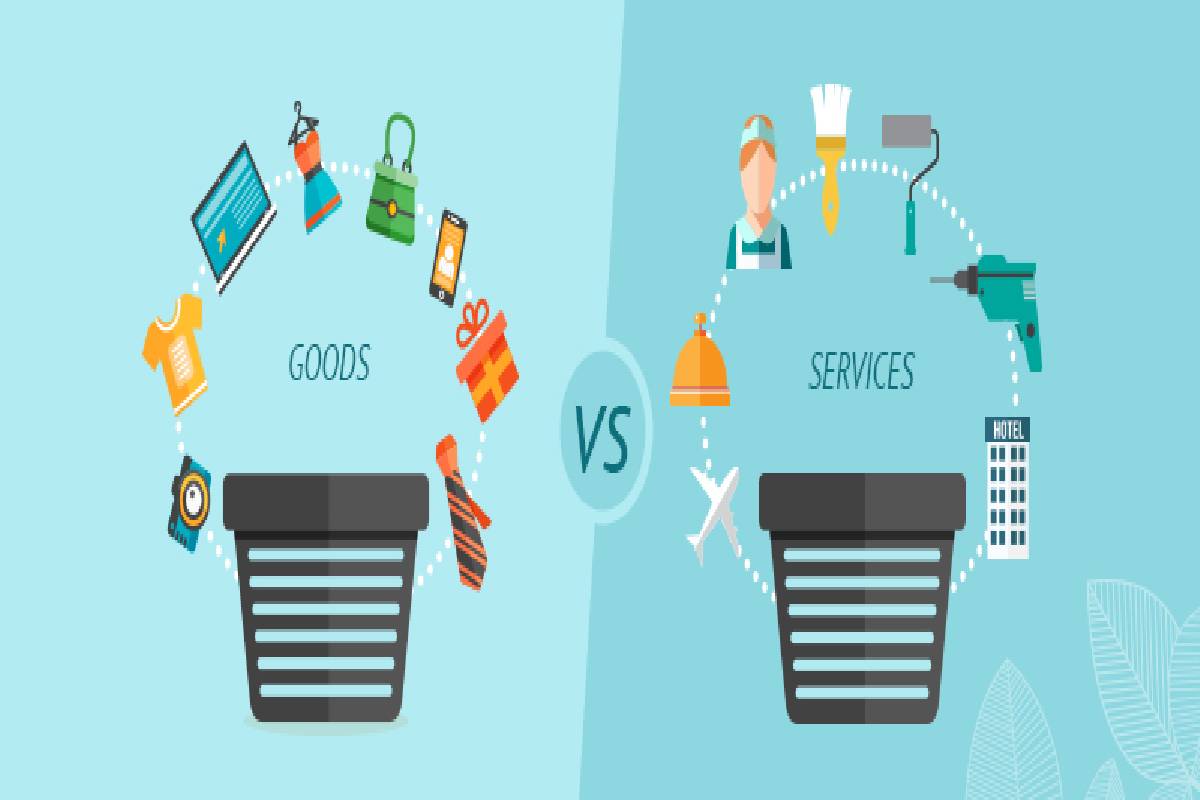
The difference between goods and services is one of the essential topics discussed in economics. You can understand this concept by looking at the money you spend every month on your family budget and identifying which expenses are for physical products and which are for services.
Goods vs. Services
You can easily divide your monthly spending into two categories: money spent on goods and money spent on services.
Utility bills, such as gas, water, and electricity, are examples of services provided by different service providers. In contrast, groceries, gadgets, and appliances you purchase from the market are classified as goods.
The study of all the goods and services produced by a country is an essential concept in economics. Together, they contribute to an important economic indicator known as Gross Domestic Product (GDP).
For example, the mobile phone you purchase from a market is a good, whereas the mobile connection or calling plan you pay for is a service.
Similarly, the stove you use for cooking at home is classified as a good, while the gas supply you purchase to fuel it is a service. The refrigerator you buy from the market is also a good, whereas the electricity needed to operate it is a service.
Understanding these examples helps explain the difference between tangible products and intangible services. A burger purchased at McDonald’s or a soft drink bought from a roadside stall is an example of a physical good. In contrast, services provided by doctors, lawyers, and insurance agents are examples of professional services.
Businesses that offer goods, services, or a combination of both must also consider how their operations will grow. Understanding the technology and infrastructure needs of growing businesses can help business owners plan their resources, improve efficiency, and prepare for increasing customer demand.
What Is the Difference Between Goods and Services?
Goods and services differ in several important ways, including their nature, ownership, quality, storage, and delivery.
1. Tangibility
Goods are tangible, meaning they can be physically touched, seen, and stored. Examples include mobile phones, furniture, clothing, and refrigerators.
Services are intangible because they involve activities or benefits rather than physical products. Examples include consulting, healthcare, legal assistance, and insurance services.
2. Quality and Consistency
The quality of goods can often be standardized during manufacturing, although it may still vary between products or batches.
The quality of services depends on several factors, including the service provider’s skills, experience, and interaction with customers. As a result, service quality may vary significantly.
3. Ownership and Usage
When you purchase goods, ownership is generally transferred to you. You can use, store, sell, or transfer those goods, subject to applicable restrictions.
When you purchase services, you generally pay for access, assistance, expertise, or an activity rather than ownership of a physical product. For example, hiring a consultant gives you access to professional expertise, not ownership of the consultant’s business.
4. Customer Involvement
Customer involvement is often higher in services than in goods. For example, receiving medical treatment, consulting a lawyer, or working with a marketing agency usually requires communication and cooperation between the customer and the service provider.
Goods can often be manufactured before a customer purchases them, although customers may also participate in product customization.
5. Evaluation
Goods are often easier to evaluate before purchase because customers can inspect their physical characteristics, compare specifications, and review product features.
Services can be more difficult to evaluate in advance because their quality may depend on the experience, expertise, and performance of the provider.
For example, businesses considering marketing outsourcing may need to evaluate a provider’s expertise, communication, service quality, and ability to deliver results before choosing a partner.
6. Storage and Inventory
Goods can generally be stored in inventories. These inventories help businesses track how many products are available, how many have been sold, and how many remain in stock.
Services, on the other hand, generally cannot be stored as completed inventory. They are typically delivered when requested or according to an agreed schedule. Businesses must therefore manage service capacity, employee availability, and customer demand carefully.
7. Time and Delivery
Time is particularly important in services because production and consumption often occur simultaneously. For example, a haircut is performed and consumed while the customer is receiving the service.
Some services can be prepared in advance or delivered later, but delays may still affect customer satisfaction.
Goods are often manufactured before they are sold, allowing businesses to store them until customers place orders. However, production delays and shipping problems can still affect delivery times.
8. Relationship Between Goods and Services
Services can influence the sale of goods, and goods can also influence the demand for services.
For example, after purchasing a refrigerator, a customer may need delivery, installation, maintenance, or repair services. Similarly, a high-quality product can increase demand for related services, while reliable customer support can improve customer confidence in the product.
Businesses involved in distribution must understand this relationship to maintain customer satisfaction and operational efficiency. The principles discussed in building resilience in modern distributors highlight the importance of adaptability, effective communication, and preparation when responding to changing customer needs and supply chain challenges.
Conclusion
Goods and services are both essential components of economic activity. Goods are tangible products that can generally be owned and stored, while services are activities or benefits provided to customers.
Understanding the differences between them helps consumers make informed purchasing decisions and enables businesses to develop suitable pricing, marketing, inventory, and customer service strategies.
Whether a business sells physical products, provides professional services, or combines both, recognizing these distinctions can support better planning, improved customer experiences, and sustainable growth.